Sushovan Majhi
Assistant Professor of Data Science
The George Washington University
Samson Hall 313, Washington, D.C.
s.majhi@gwu.edu
(+1) 202-994-1235

What is the shape of this thing? Topology's oldest question—and one that statistics has been almost-asking for a century. Posed correctly, it turns out to be the right question for data more often than is generally conceded.
I am a mathematician—Calcutta, Bangalore, New Orleans, Berkeley, now Washington—collecting, with each city, a different lesson in how shape is recovered from noise. The papers make those lessons rigorous: when a Vietoris–Rips complex remembers the manifold it was sampled from, when a Reeb graph can be talked into reconstructing a road network from GPS traces, and on those rare occasions when a Gromov–Hausdorff distance can be talked into being computed at all. The collaborations export the proofs to finance, climate, fluid mechanics, and biology—disciplines where the data is unrepentantly real.
Open to advising the curious and the obstinate. Write.
Dispatches from the Field
New Brunswick, 5 Jun 2026 — Talk on Lower Bounding the Gromov–Hausdorff Distance in Metric Graphs at the 42nd International Symposium on Computational Geometry (SoCG’26), Rutgers University.
From the press, 23 May 2026 — Accepted— Vietoris–Rips Shadow for Euclidean Graph Reconstruction, with Rafal Komendarczyk and Atish Mitra, is in press at the Journal of Applied and Computational Topology.
Providence, 20 May 2026 — Talk on PLACE: Persistence Landmarks for Assured Classification Embedding at the ICERM workshop on Foundations of Computational Geometry and Topology.
From the press, 4 May 2026 — A new preprint, A Closed-Form Adaptive-Landmark Kernel for Certified Point-Cloud and Graph Classification, with Atish Mitra, Žiga Virk, and Pramita Bagchi; submitted to the Journal of Machine Learning Research.
From the press, 3 May 2026 — A new preprint, A Closed-Form Persistence-Landmark Pipeline for Certified Point-Cloud and Graph Classification, with Atish Mitra, Žiga Virk, and Pramita Bagchi; submitted to Transactions on Machine Learning Research.
Savannah, 29 Mar 2026 — Talk on The Geometric Latschev’s Theorem: Euclidean Shape Reconstruction via Vietoris–Rips Shadow at the AMS Spring Southeastern Sectional Meeting.
From the press, 15 Mar 2026 — Interpretable Classification of Time Series Using Euler Characteristic Surfaces posted to the arXiv; under review at Nature Scientific Reports.
Washington, 11 Mar 2026 — Spoke on Geometric Latschev’s Theorem at the Spring Topology Conference, University of Alabama.
From the press, 15 Feb 2026 — Paper on lower bounding the Gromov–Hausdorff distance in metric graphs accepted to the 42nd International Symposium on Computational Geometry (SoCG’26), New Jersey.
From the press, 15 Jan 2026 — A preprint, The Shadow of Vietoris–Rips Complexes in Limits, with Kazuhiro Kawamura and Atish Mitra; submitted to Foundations of Computational Mathematics.
Washington, 7 Jan 2026 — Talk on Vietoris–Rips Shadow for Euclidean Graph Reconstruction at the Joint Mathematics Meetings.
Washington, 4 Jan 2026 — Co-organized two AMS Special Sessions—on Topological Data Analysis for Non-linear Dynamics, and on Topological and Geometric Shape Reconstruction—at the Joint Mathematics Meetings.
Queens College, 8 Nov 2025 — Spoke on the Vietoris–Rips shadow for Euclidean graph reconstruction at the Fall Workshop on Computational Geometry.
New Orleans, 4 Oct 2025 — Back at Tulane for the AMS Southeastern Sectional, this time on the Vietoris–Rips shadow for Euclidean graph reconstruction.
From the press, 15 Sep 2025 — Causality Analysis of COVID-19 Induced Crashes in Stock and Commodity Markets appeared in the International Journal of Modern Physics C.
Washington, 15 Aug 2025 — Took the chair of the Undergraduate Curriculum Committee in the GWU Data Science Program.
NIT Sikkim, 1 Aug 2025 — Buddha Nath Sharma begins doctoral work on topological data analysis in financial markets, co-advised with Md. Nurujjaman.
Kyoto, 19 Jun 2025 — Talk on topological and geometric reconstruction of spaces beyond manifolds at TDA Week, Kyoto University.
From the press, 15 Jun 2025 — A workshop paper, Detecting the Indian Monsoon using Topological Data Analysis, presented at ATMCS’25, with Joshua Dorrington, Kristian Strommen, and the Oxford climate group.
From the press, 2 Jun 2025 — A preprint, Vietoris–Rips Shadow for Euclidean Graph Reconstruction, with Rafal Komendarczyk and Atish Mitra; submitted to the Journal of Applied and Computational Topology.
From the press, 25 Mar 2025 — A preprint, Topology of the Polar Vortex and Montana Weather, with Joshua Dorrington, Atish Mitra, Kristian Strommen, and the Oxford climate group; presented at ATMCS’25.
Clemson, 8 Mar 2025 — Talk at the AMS Southeastern Sectional on topological stability and Latschev-type reconstruction theorems for CAT(κ) spaces.
Newport News, 6 Mar 2025 — Spoke on Topological Stability at the Spring Topology and Dynamics Conference, Christopher Newport University.
From the press, 15 Feb 2025 — Hausdorff vs Gromov–Hausdorff Distances appeared in Discrete & Computational Geometry, with Henry Adams, Florian Frick, and Nichola McBride.
Seattle, 9 Jan 2025 — Presented Predicting the Onset and Withdrawal of the Indian Monsoon using Persistent Homology at the Joint Mathematics Meetings.
From the press, 25 Nov 2024 — A preprint, Lower Bounding the Gromov–Hausdorff Distance in Metric Graphs, with Henry Adams, Fedya Manin, Nicolò Zava, and Žiga Virk.
New Orleans, 17 Nov 2024 — Returned to Tulane to speak on lower bounds for the Gromov–Hausdorff distance.
From the press, 15 Nov 2024 — Complex Network Analysis of Cryptocurrency Market During Crashes appeared in Physica A, with the NIT Sikkim finance group.
Tufts, 14 Nov 2024 — Talk at the Fall Workshop on Computational Geometry, on lower bounds for the Gromov–Hausdorff distance.
From the press, 25 Oct 2024 — A preprint, Faithful Reeb Graph Reconstruction of a Tectonic Subduction Zone from Earthquake Hypocenters, with Halley Fritze, Marissa Masden, Atish Mitra, and Michael Stickney.
From the press, 15 Oct 2024 — Identifying Extreme Events in the Stock Market: A Topological Data Analysis appeared in Chaos.
Mandi & Chennai, 10 Oct 2024 — Lectured on a taste of topological data analysis at IIT Mandi and Vellore Institute of Technology during a fortnight in India.
Washington, 20 Aug 2024 — Interviewed by the GWU Hatchet on joining the Data Science Program.
Washington, 15 Aug 2024 — Joined the Data Science Program at The George Washington University as Assistant Professor.
From the press, 15 Jun 2024 — A preprint, Topological Stability and Latschev-type Reconstruction Theorems for Spaces of Curvature Bounded Above, with Rafal Komendarczyk and Will Tran; submitted to Discrete & Computational Geometry.
Athens, 14 Jun 2024 — Presented Demystifying Latschev’s Theorem for Manifold Reconstruction at SoCG 2024.
From the press, 15 May 2024 — Demystifying Latschev’s Theorem: Manifold Reconstruction from Noisy Data appeared in Discrete & Computational Geometry.
Bozeman, 28 Mar 2024 — Spoke at Montana State University on Latschev’s theorem and quantitative manifold reconstruction.
From the press, 15 Mar 2024 — Distance Measures for Geometric Graphs appeared in Computational Geometry: Theory and Applications, with Carola Wenk.
From the press, 15 Jan 2024 — Approximating Gromov–Hausdorff Distance in Euclidean Space appeared in Computational Geometry: Theory and Applications, with Jeffrey Vitter and Carola Wenk.
AATRN, 23 Aug 2023 — A talk at the Applied Algebraic Topology Research Network seminar on Latschev’s theorem; recording on YouTube.
Montreal, 4 Aug 2023 — Spoke on Graph Mover’s Distance at the 34th Canadian Conference on Computational Geometry.
From the press, 15 May 2023 — Vietoris–Rips Complexes of Metric Spaces Near a Metric Graph appeared in the Journal of Applied and Computational Topology.
Raleigh, 14 Oct 2022 — Talk at the Fall Workshop on Computational Geometry, North Carolina State University, on similarity measures for geometric graphs.
Tripura, 15 Feb 2022 — Visiting lecture on topological methods in the reconstruction and comparison of shapes at ICFAI University.
New York, 15 Sep 2021 — Lectured on a taste of topological data analysis at the Hunter College Mathematics Department.
No matching items
Research
Two halves of one programme: the theorems and the data that asked the question.
Two halves of the mathematical foundations of data science, with topology as the lens. On one side, theorems about when a finite sample remembers the shape it was drawn from. On the other, the disreputable data that wanted to know in the first place. The two halves keep each other honest—and, on bad days, mutually embarrassed.
The theoretical side develops provable methods for shape, graph, and manifold reconstruction. The objects of study are simplicial complexes built from finite samples—Vietoris–Rips, Čech, alpha—and the questions are about when, and how faithfully, such complexes recover the topology and geometry of an unknown ground truth. The tools are inherited from algebraic topology, metric geometry, and computational geometry; all three are considerably older than the data they have lately been asked to analyse.
“The theorems decide when, and how faithfully, a finite sample remembers the manifold it was drawn from.”
The applied side carries the methods into finance, climate, fluid mechanics, and biology—wherever the data is unrepentantly high-dimensional but is suspected, often correctly, of living on something simpler. Recent collaborations have hunted monsoon onsets, the topology of the polar vortex, two-phase flow regimes, and the moods of the stock market.
Seven projects, in summary. Click a card for collaborators, papers, and the long-form excuse for the title.


No matching items
The full programme—projects, publications, and ongoing collaborations—lives on the research page.
Recent Papers
In the order they have most recently surprised their author.
The three most recent preprints, listed in the order in which they have most recently surprised their author. The full account—journals, conference proceedings, and the thesis—is on the publications page.
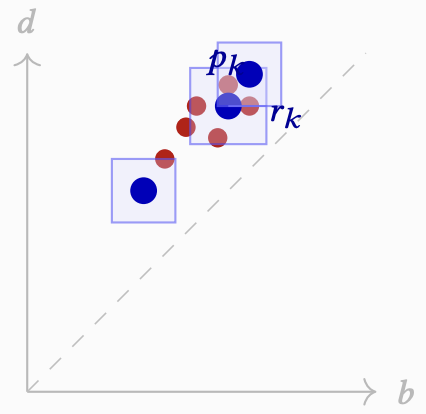
A Closed-Form Adaptive-Landmark Kernel for Certified Point-Cloud and Graph Classification
submitted toJournal of Machine Learning Research·2026
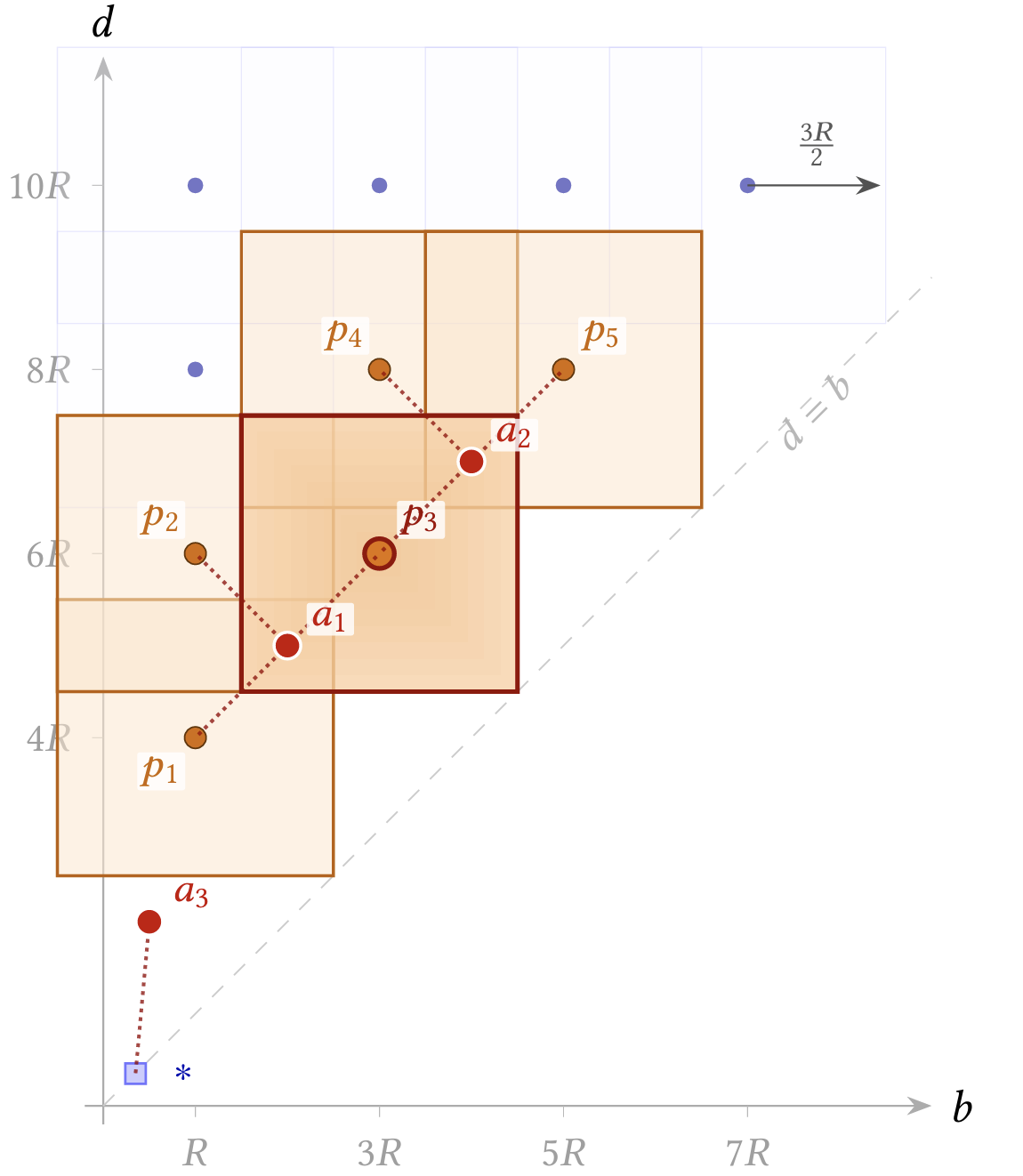
A Closed-Form Persistence-Landmark Pipeline for Certified Point-Cloud and Graph Classification
submitted toTransactions on Machine Learning Research·2026
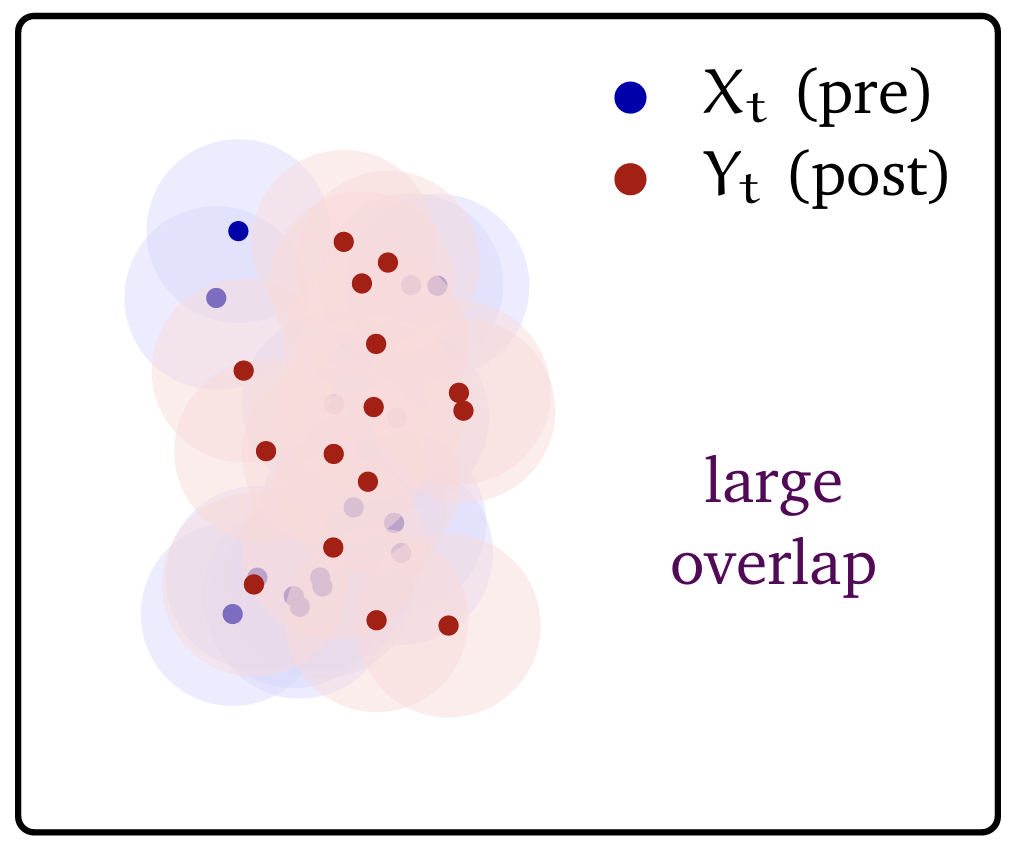
Detecting Regime Transitions in Dynamical Systems via the Mixup Euler Characteristic Profile
submitted toChaos: An Interdisciplinary Journal of Nonlinear Science·2026
No matching items
Students and Mentees
Eight, between Washington, Sikkim, and Zurich.
Eight students between GWU, NIT Sikkim, and Zurich. Each has been issued a corner of the programme—kernels, descriptors, reconstruction, dynamics—and instructed to send dispatches.
Doctoral students
- Buddha Nath Sharma Ph.D., NIT Sikkim Topological data analysis for time series and dynamical systems.
Master's students
- Alexander D. Silberman, Chinaza Belolisa, Madeline Bumpus M.S. Data Science, GWU Topological methods for recommender systems.
- Sayam Palrecha M.S. Data Science, GWU Topological data analysis for finance.
- James Moukheiber M.S., University of Zurich Topological data analysis for geographic information systems.
Undergraduate students
- Edward Bae B.S. Computer Science, GWU Topological methods for recommender systems.
- Abby Stein B.S. Data Science, GWU Topological methods for petroleum flow analysis.
Past mentees
- Khush Shah, Shikha Kumari M.S. Data Science, GWU Geometric graph reconstruction.
- Anish Rai Ph.D., NIT Sikkim Topological data analysis for finance.
Teaching
Foundations to topology, four institutions, three countries.
A pedagogy that runs from foundations to topological methods: foundations of data science, statistics, machine learning, computer science, and topological data analysis. The students change; the limits do not.
Currently teaching, Spring 2026
- Algorithm Design (DATS 6001) Graduate · GWU Course website · password-protected; contact for access.
- Data Science Capstone (DATS 4001) Undergraduate · GWU
At The George Washington University
- Introduction to Data Mining (DATS 6103) Graduate · Fall 2023–current
- Linear Algebra for Data Science Graduate · Summer 2024 Course website · password-protected; contact for access.
- Computer Science Foundations (DATS 6450) Graduate · Fall 2023
Earlier
- Topological Data Analysis Graduate · NIT Sikkim · Fall 2023 Course website.
- Statistics for Data Science (MIDS 203) Graduate · UC Berkeley · 2020–2023
- Undergraduate Statistics for Business (MATH 1140) Undergraduate · Tulane · Summer 2019
- Linear Algebra, Complex Analysis, Real Analysis Christ University · MES College · GATE-IIT, Bangalore · 2011–2013
The teaching statement carries the philosophy — or, failing that, the alibi. For self-contained tutorials in data science and topology, see the tutorials page.
Service
The unpaid half of the profession.
Editorial and committee work—the unpaid half of the profession, and the half in which the field actually gets organised.
- Undergraduate Advisor GWU Data Science · 2024–current
- AMS Special Session co-organiser JMM Washington, D.C. · 2026 · Seattle 2025 · AMS Fall Sectional Tulane 2025 Sessions on Topological Data Analysis for Non-linear Dynamics, Topological and Geometric Shape Reconstruction, Climate Science at the Interface between TDA and Dynamical Systems, and Applied Topology and Topological Data Analysis.
- Ph.D. thesis reader Tulane 2024 · GWU Mathematics 2025 Will Tran, Distortion and Curvature in the Shape Reconstruction Problem; Peiqi Yang, Stochastic Approximation on Manifolds and Topological Data Analysis.
- Journal & conference reviewer SIMODS · DCG · FoDS · SoCG · WADS · others Reviewed for SIAM Journal on Mathematics of Data Science, Discrete and Computational Geometry, Foundations of Data Science, the Symposium on Computational Geometry, and several others.
The complete ledger—including the SIAM Graduate Student Chapter at Tulane and the data-science webinar series at UC Berkeley—has been quietly preserved in the CV.
Talks
Newest first, on the assumption that the most recent argument is the one most likely still to hold.
Invited talks, conferences, and seminars.
42nd International Symposium on Computational Geometry (SoCG’26), Rutgers University, New Brunswick, NJ, Jun 2026 — Lower Bounding the Gromov–Hausdorff Distance in Metric Graphs
Spring Topology and Dynamics, Christopher Newport University, Mar 2025 — Topological Stability
Joint Mathematics Meetings, Seattle, Jan 2025 — Predicting the Onset and Withdrawal of the Indian Monsoon using Persistent Homology
Tulane University, New Orleans, Nov 2024 — Lower Bounding the Gromov–Hausdorff Distance
Fall Workshop on Computation Geometry, Tufts University, Nov 2024 — Lower Bounding the Gromov–Hausdorff Distance
Indian Institute of Technology, Mandi, India, Oct 2024 — A Taste of Topological Data Analysis (TDA): Reconstruction of Shapes
Vellore Institute of Technology, Chennai, India, Oct 2024 — A Taste of Topological Data Analysis (TDA): Reconstruction of Shapes
Symposium on Computational Geometry (SoCG), Athens, Greece, Jun 2024 — Demystifying Latschev's Theorem for Manifold Reconstruction
Montana State University, Mar 2024 — Demystifying Latschev's Theorem for Manifold Reconstruction
Applied Algebraic Topology Research Network (AATRN), Aug 2023 — Demystifying Latschev's Theorem for Manifold Reconstruction
The 34th Canadian Conference on Computational Geometry, Aug 2023 — Graph Move's Distance
Fall Workshop on Computational Geometry, North Carolina State University, Oct 2022 — Similarity Measures for Geometric Graphs
ICFAI, Tripura, Jan 2022 — A Taste of Topological Data Analysis (TDA): Reconstruction of Shapes
Hunter College, New York, Sep 2021 — A Taste of Topological Data Analysis (TDA): Reconstruction of Shapes
Tulane University, Jan 2020 — Shape Comparison and Gromov-Hausdorff Distance
Tulane University, Aug 2019 — Shape Reconstruction
Graduate Colloquium, Tulane University, Dec 2016 — Music, Machine, and Mathematics
Graduate Colloquium, Tulane University, Apr 2016 — Computational Complexity
Graduate Colloquium, Tulane University, Sep 2015 — The Mathematical Mechanic
No matching items
Education
Calcutta, Bangalore, New Orleans — and a Berkeley coda.
Calcutta, Bangalore, New Orleans — fourteen years of mathematics across three institutions, with a Berkeley postdoctoral coda for the slow art of saying it plainly.
- Ph.D. in Mathematics Tulane · New Orleans Advised by Carola Wenk. Computational geometry, computational topology, topological data analysis, differential geometry.
- M.S. in Mathematics TIFR · Bangalore Differential equations, probability theory, complex and functional analysis, measure theory.
- B.S. (Hons.) in Mathematics Ramakrishna Mission Vidyamandira · Calcutta University Real analysis, linear algebra, numerical analysis, statistics, physics.
- Postdoctoral Research Fellow UC Berkeley · School of Information Data science research and the MIDS lecture series.